

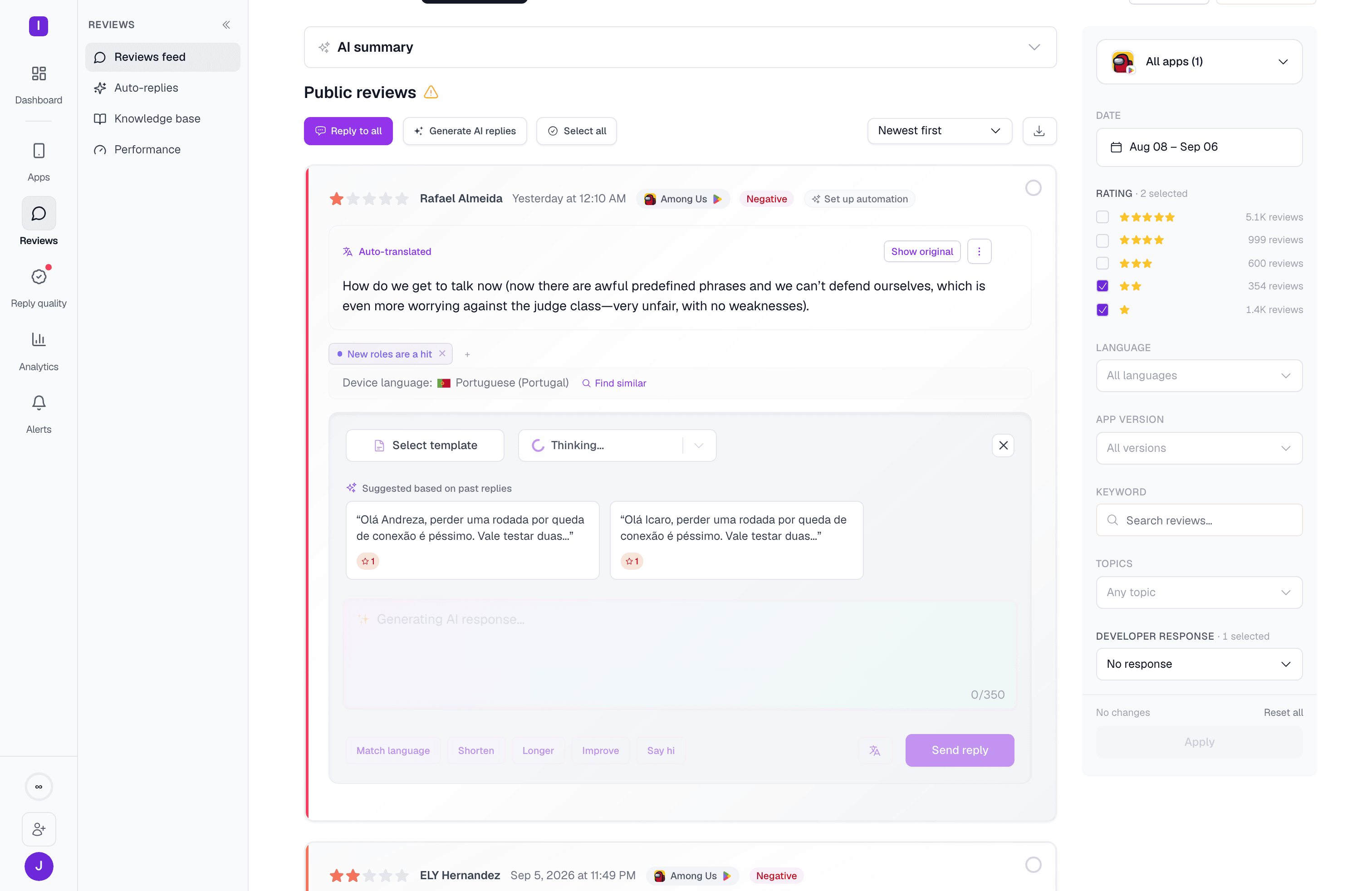
Opening the reply workspace
Click the Reply to review… field under any review that doesn’t have a response yet. It expands into the full composer: a template picker, the Generate reply dropdown, and (once there’s text in the box) the enhancement actions and character counter.To send responses, you need an active app store integration for that app. AppReply checks integration status when you submit, not before.
Platform character limits
Each app store has a different maximum reply length, and the counter below the textbox updates automatically based on which platform the review is from.AI response generation
The Generate reply button drafts a balanced, professional response by default. Its dropdown arrow opens a menu with two built-in presets, plus any AI instructions your organization has created:- Ask to contact support — guides the user toward your support channels; use it for bug reports or account issues that need investigation beyond a public reply
- Ask to increase rating — a tactful response for reviews whose complaints you’ve since resolved
Suggested replies (Pro plan)
When you open a review, AppReply may show 1-2 chips with past responses that performed well on similar reviews, found by semantic similarity. Click one to adapt it for the current review; it’s inserted as a starting point you can still edit or regenerate.Knowledge base
When your organization has uploaded knowledge base documents (FAQs, product guides, support articles), the AI checks them for relevant context when generating a reply. A success toast after generation names how many documents were used, so you can tell when a draft is grounded in your own material.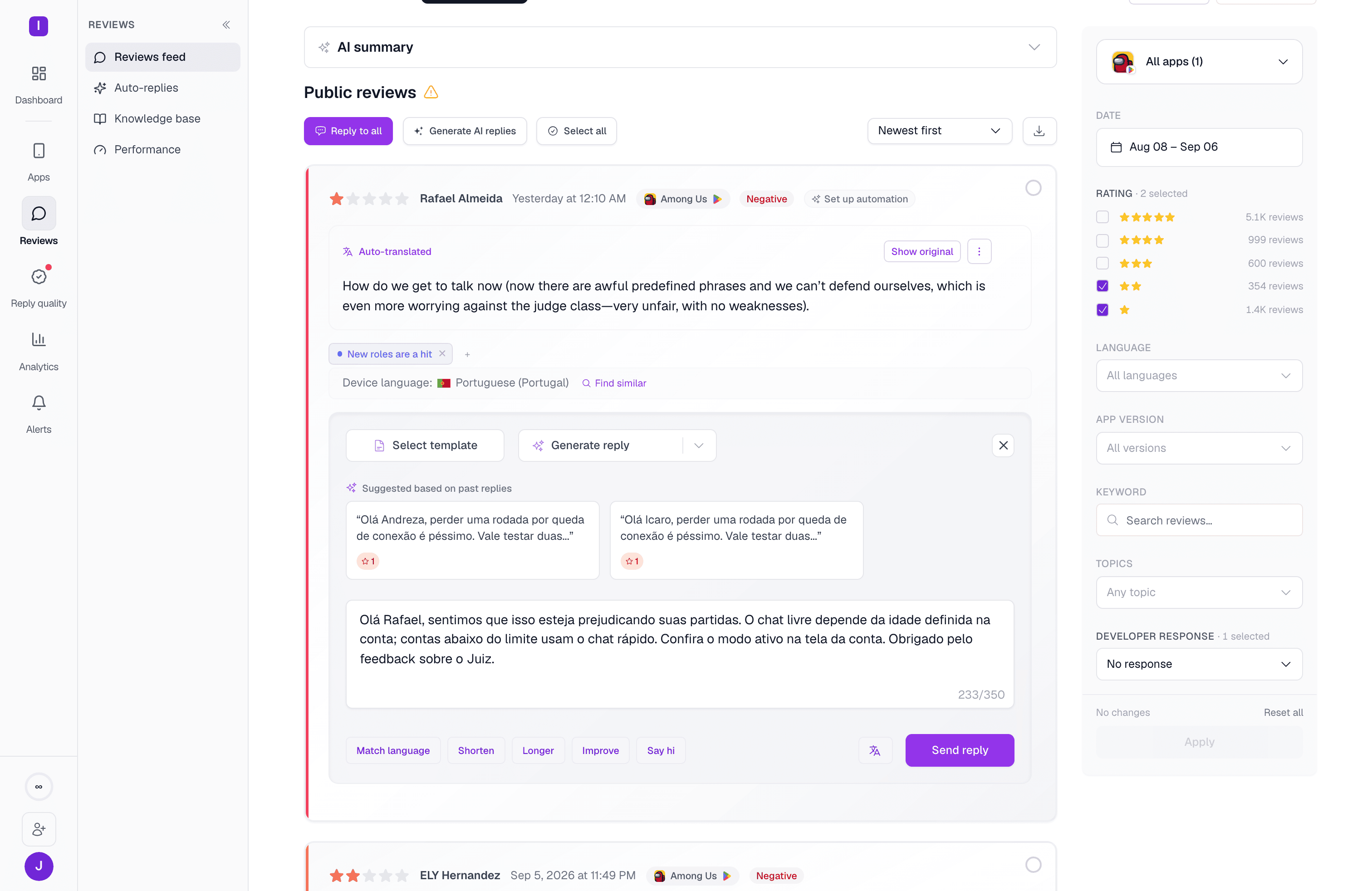
Enhancement actions
Once there’s a draft in the box (generated, from a template, or typed by hand), a row of one-click actions can refine it further:Sending and saving
Send reply submits to the store. Save reply as template — available once a reply has gone out — saves that exact text into your template library so you can reuse it.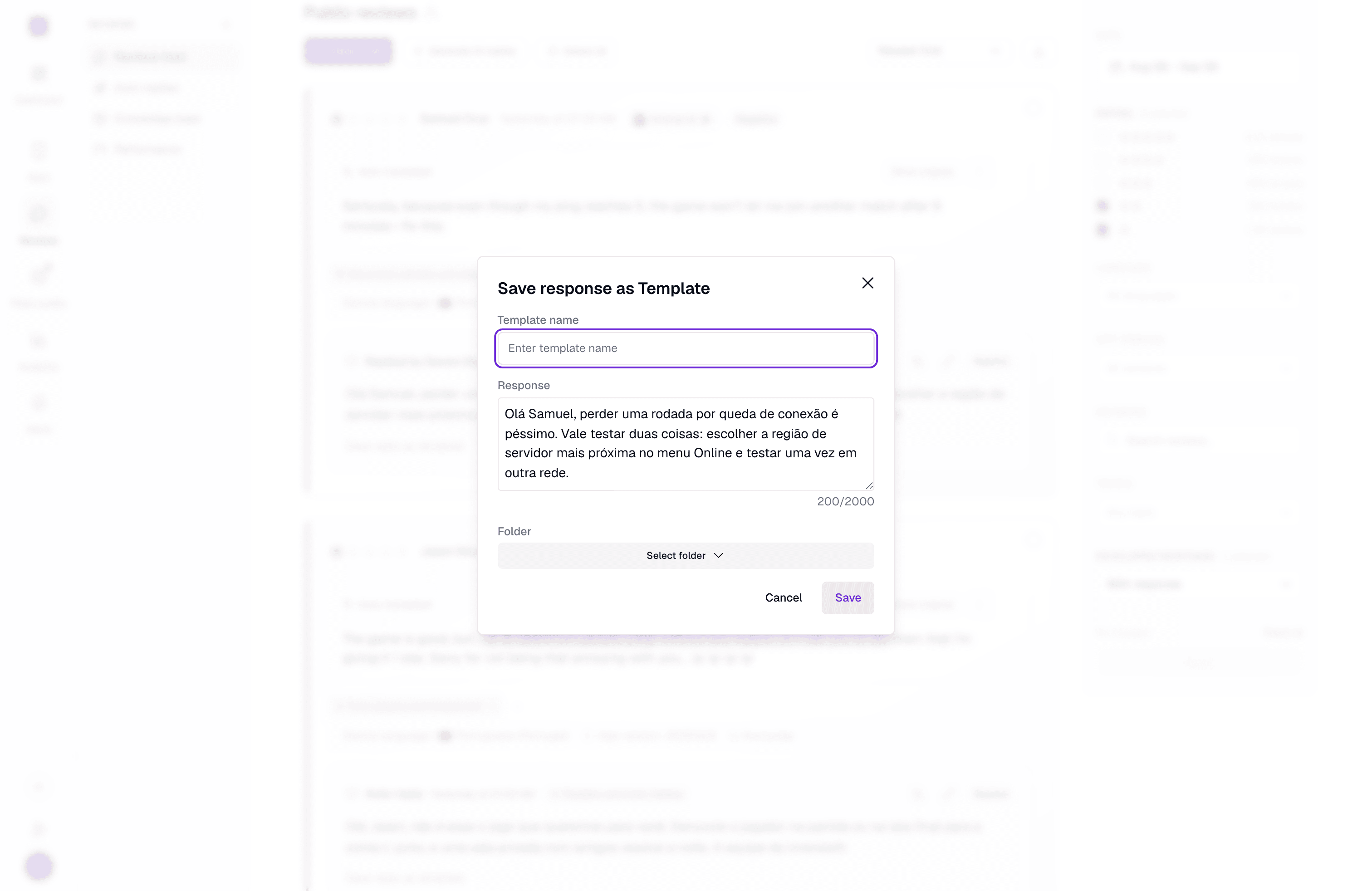
Keyboard shortcuts
Writing effective responses
Different review types call for different approaches:
Across all review types, reference the review’s actual content — a reply that responds to specifics reads differently from a generic template.
Quality checks
The system validates your response before sending: it checks character count against the platform limit and confirms the app’s store integration is still active. A complete response history is kept for each review, so you can see everything that’s been sent to it, and when.Reply templates
Use your saved templates from inside the composer
Translation
Handle international reviews with auto-translation